
Pathways Program
We imagine a vibrant arts and culture sector in which people can bring their whole selves to their work.
The Pathways program is a year-long process that supports arts, culture, and heritage practitioners to learn, reflect, and integrate equity and access more deeply into their work. Participants are supported with individualized learning plans, peer networks, and one-on-one guidance.
Full details on the program and how to apply can be found at manypathways.ca.
Upcoming Events
Past Events
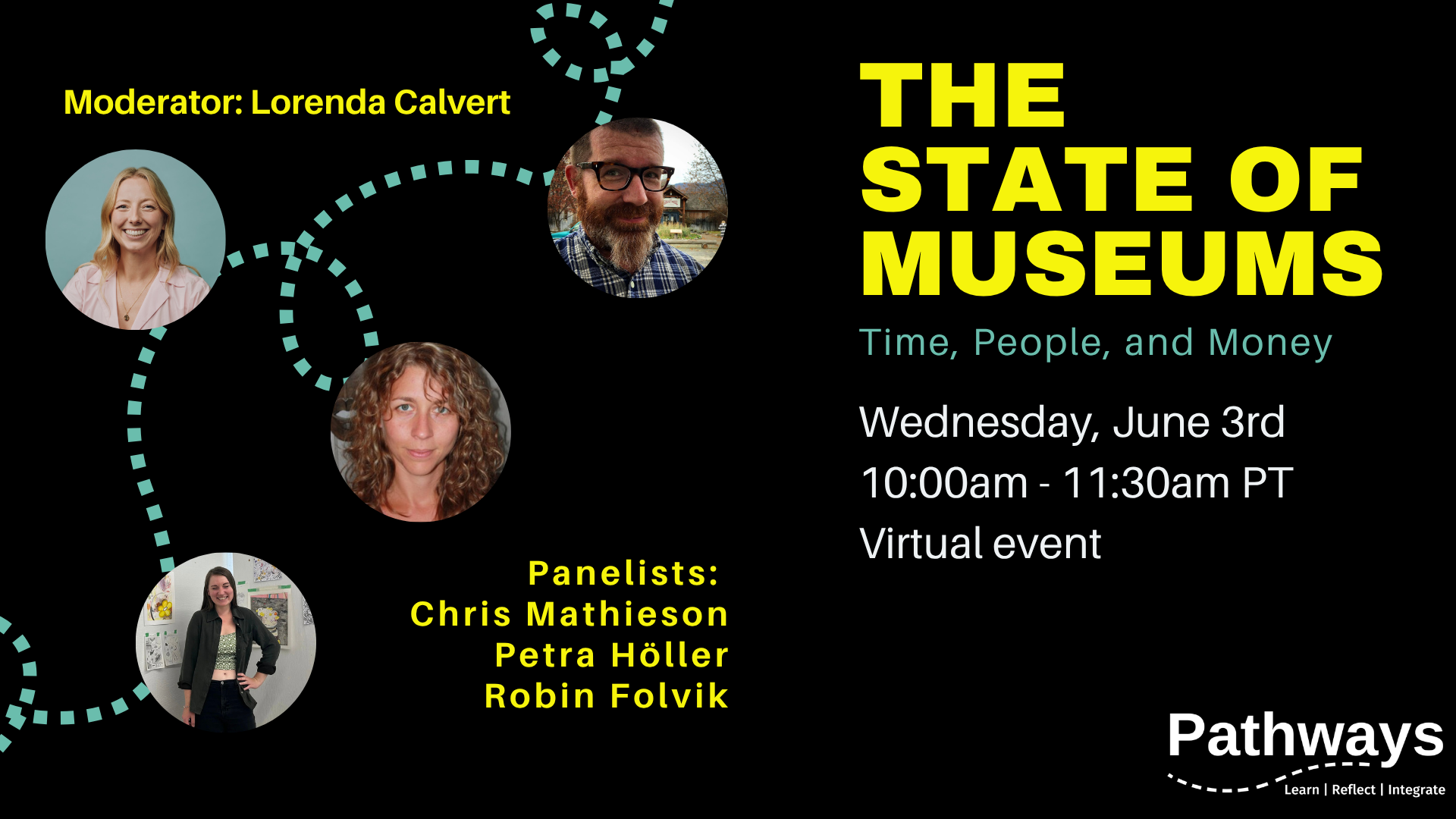
The State of Museums: Time, People, Money
Moderator: Lorenda Calvert
Panelists: Chris Mathieson, Petra Höller, and Robin Folvik
ABOUT THIS PANEL
Museums are being asked to respond to urgent and expanding pressures, including climate change, AI, reconciliation, and repatriation, infrastructure needs, community engagement, and financial sustainability. Many small and rural museums are doing this work with limited staff, flat operating funding, and growing expectations from communities, funders, boards, and the public.
This panel brings together leaders from small museums across BC to reflect on the current state of the sector through three connected pressures: time, people, and money. Panelists will share practical examples from their own organizations, including revenue diversification, AI and working with a mixed priority board, and confronting denialism in community-facing work.
Together, this conversation will explore what it means to do meaningful, relational museum work when capacity is stretched, and what kinds of support, advocacy, and structural change are needed for museums to thrive.
Automated live transcription and ASL interpretation will be provided.
Note: This session will be recorded.
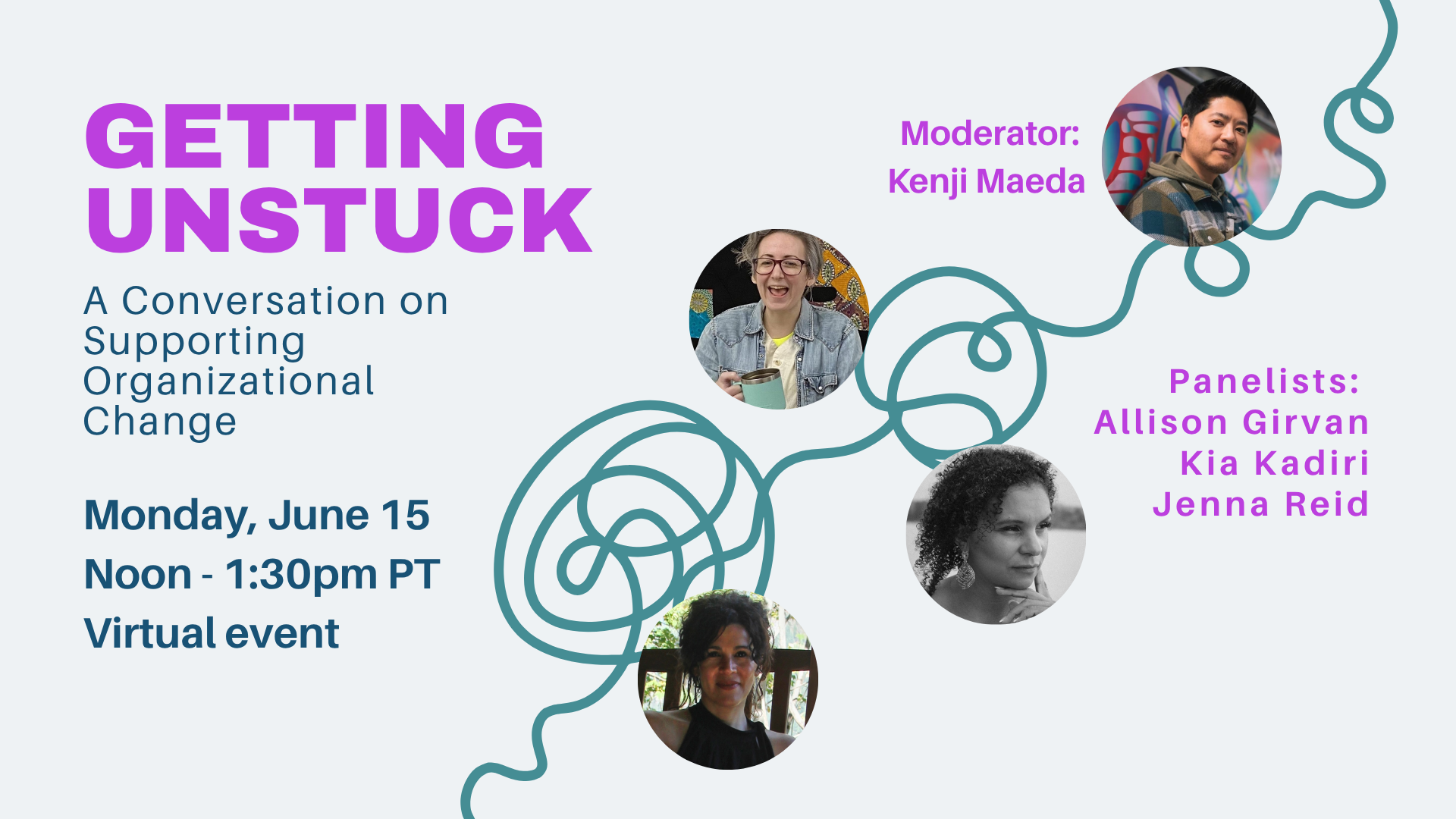
Getting Unstuck: A Conversation on Supporting Organizational Change
Moderator: Kenji Maeda
Panelists: Allison Girvan, Jenna Reid, and Kia Kadiri
ABOUT THIS PANEL
What does organizational change look like? From practices and policies, to people and power, the shifts can manifest in many ways. Over the past three years, the Pathways program has supported approximately 70 organizations annually through learning and deepening their equity practices.
Join us as the panel discusses what it’s like to be working directly to support organizations and leaders (within and outside Pathways) on their learning journey, unpack themes that have emerged, changes that have been witnessed, and share resources and practices that you can take back into your organization.
Automated live transcription and ASL interpretation will be provided.
Note: This session will be recorded.
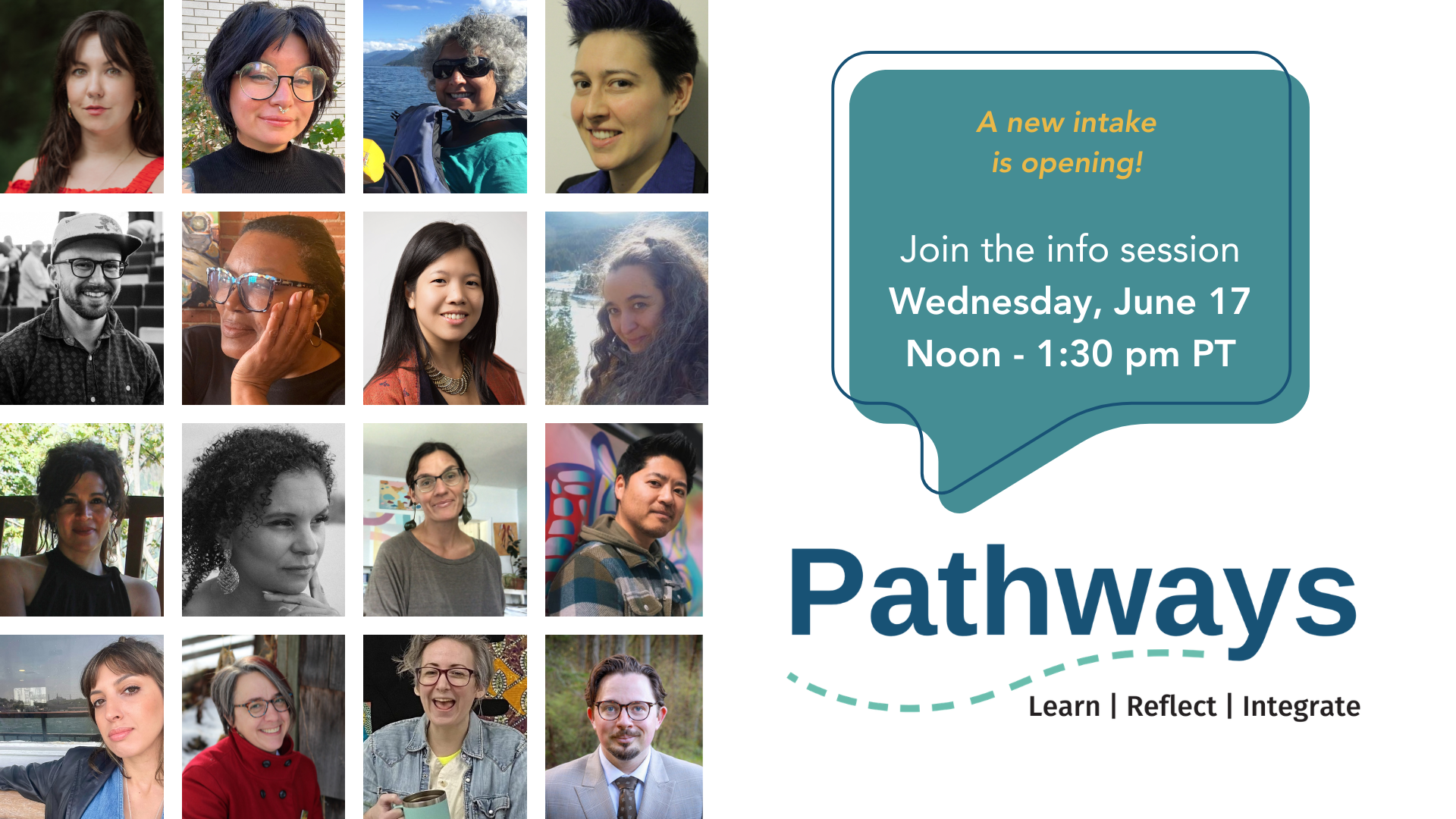
Pathways Info Session
Curious about Pathways and wondering if it might be the right fit for your organization?
Join us for a conversational info session about the Pathways program and application process.
This year’s session provides an open space to hear about the program’s shape, rhythm, and approach. We’ll share practical details about the application, reflect on the kinds of questions and conversations emerging through Pathways, and offer perspectives on what has supported organizations in different contexts.
This will be a space to ask questions, hear from the people holding the program, and get a clearer sense of how Pathways might meet your organization where it is.
This session is for folks who have explored the website and want a clearer, more human sense of the program before moving into the application process.
Automated live transcription and ASL interpretation will be provided.
Note: This session will be recorded.
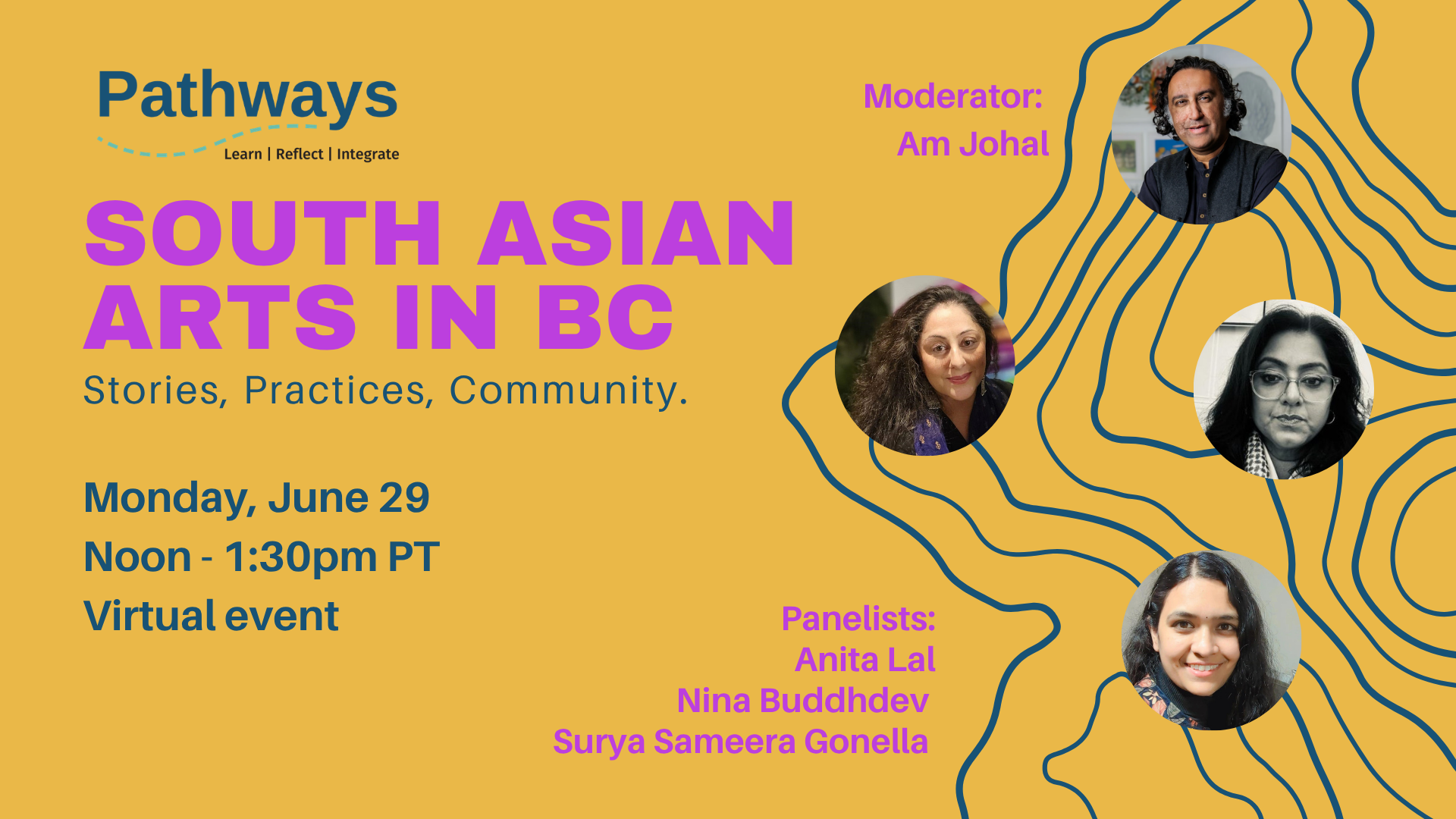
South Asian Arts in BC: Stories, Practices, Community.
Pathways is looking forward to hosting another community-context panel at the end of this month! Join us for an open conversation with South Asian artists and cultural leaders as we explore the joys, complexities, and diversity of South Asian arts practices in the province of BC. Through reflections and dialogue, panelists will share insights into their creative practices, what they're seeing in the sector, and offer suggestions on how organizations can better support and work with South Asian artists. This session will be an opportunity for learning, listening, and deeper understanding for a stronger sector.
Moderator: Am Johal
Panelists: Surya Sameera Gonella, Nina Buddhdev, Anita Lal
Who is this for? Anyone! Whether you work in arts, culture, or heritage, care about equity, accessibility, disability justice, and systems change or are curious about the Pathways program, you’re welcome to attend.
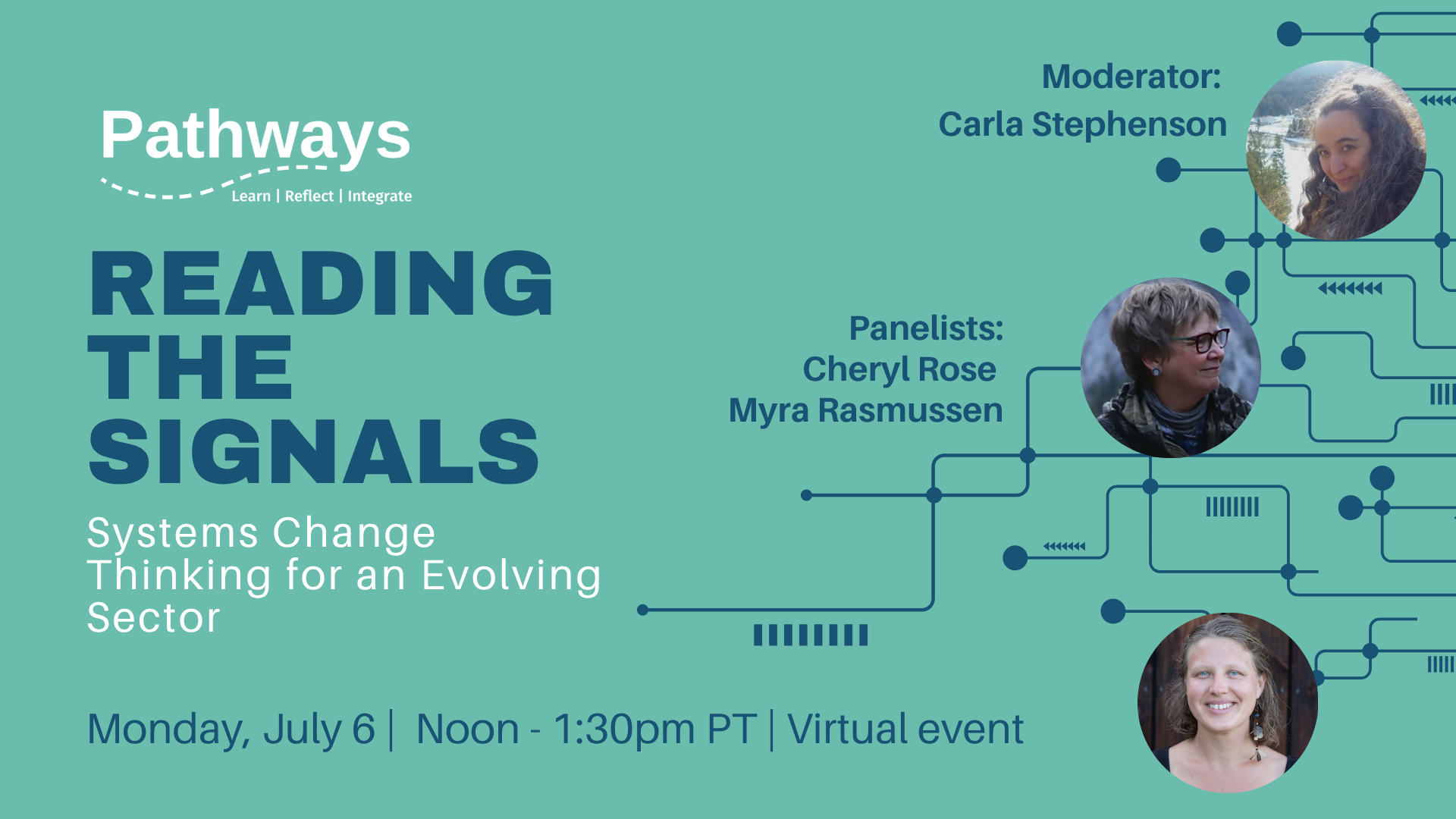
Reading the Signals: Systems Change Thinking for an Evolving Sector
Pathways has just one more public panel event to share with you this summer, and if you work in the arts, culture, and heritage sector, you won't want to miss "Reading the Signals: Systems Change Thinking for an Evolving Sector"
What if the challenges facing the BC arts sector aren’t just obstacles to navigate—but signals of deeper systems in transition?
In a time of polarization, shrinking resources, and rising pressure, many arts organizations are being pushed to respond, adapt, and justify their work in new ways. But reacting within the same frameworks may only reinforce the conditions we’re struggling against.
In this Pathways panel, we will step back and look through a systems change lens: to question what’s really shifting, what’s breaking down, and what new possibilities might be emerging.
Moderator: Carla Stephenson
Panelists: Cheryl Rose, Myra Rasmussen
Who is this for? Anyone! Whether you work in arts, culture, or heritage, care about equity, accessibility, disability justice, and systems change or are curious about the Pathways program, you’re welcome to attend.
In partnership with

The Pathways program has a provincial scope, our work is conducted across many ceded, unceded and sovereign territories of Nations across what is referred to as British Columbia. Pathways partners’ offices are located on the unceded and stolen land of the Sinixt (sńʕaýckstx) the traditional, unceded territories of the Musqueam, Squamish and Tseil-Waututh nations; and on the traditional, unceded territories of the Lekwungen-speaking peoples (Songhees and Xwsepsum Nations).